Cybersecurity
Do I Still Need IT Support If I Use AI Tools?
Yes. AI tools can flag issues and draft documentation, but a CMMC or NIST 800-171 auditor needs a named human control owner, not a chatbot. Here's what AI can and can't replace.
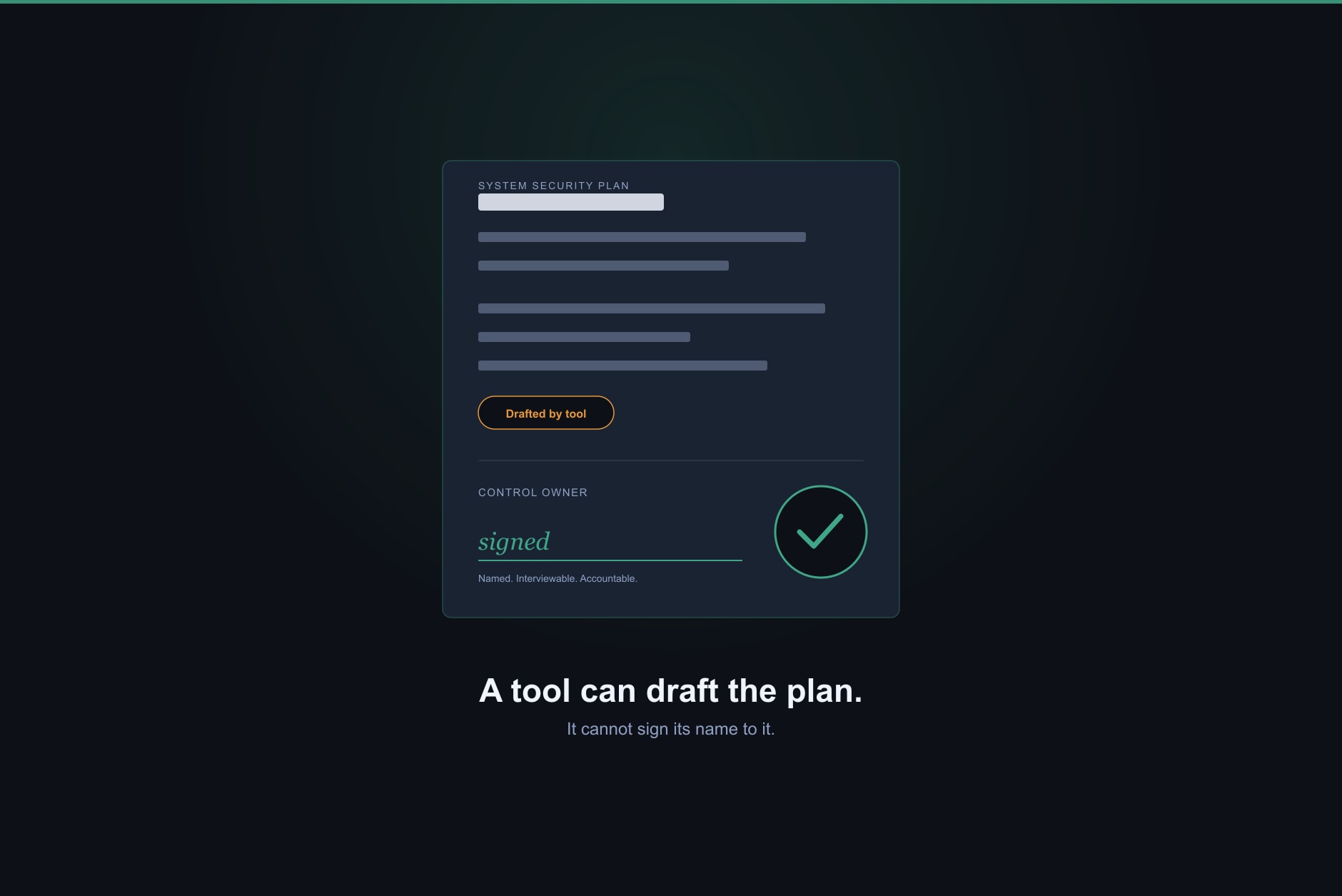
Yes, you still need IT support if you use AI tools. AI can speed up how fast you find a problem. It cannot decide which problem matters most, and it cannot stand behind that decision when an auditor or insurer asks who did.
That distinction sounds small until you are the one filling out a compliance questionnaire or a cyber insurance application. Both ask the same underlying question: who is accountable here? A chatbot is not a valid answer, and increasingly, neither is silence.
Do I still need IT support if I use AI tools?
You do, because AI tools are good at pattern-matching and bad at accountability. An AI assistant can scan a log file faster than a person and summarize what it found in plain language. It cannot decide that the finding is urgent enough to interrupt tomorrow’s schedule, and it has no standing to sign off on that call. Someone still has to own the decision. That someone is a person, not a model.
This matters more in Hampton Roads than in most places, because a large share of local small businesses touch government contracts in some form, directly or as a subcontractor. That changes what “good enough” looks like.
Why won’t a CMMC auditor accept an AI tool as my control owner?
Because CMMC and NIST 800-171 assessments are built around named, accountable individuals, not automated processes. Every control in a System Security Plan needs a person attached to it: someone who implemented it, someone who can explain it in an interview, and someone who is on the hook if it fails. An auditor is not evaluating whether your tools are impressive. They are evaluating whether a specific human being can stand behind each control and answer for it.
An AI chatbot can draft your incident response plan. It cannot be interviewed about it, and it cannot be held responsible when the plan doesn’t hold up under a real incident.
This is the gap that generic “AI won’t replace your IT provider” articles skip past. Most of what gets published on this topic argues in the abstract, that automation speeds things up but people still matter. True, but vague. The specific and testable version of that claim is this: a defense contractor working through CMMC or NIST 800-171 cannot point an auditor at an AI tool and call the control satisfied. The control needs a name attached to it. If you want the background on what those 110 requirements actually cover, the NIST 800-171 checklist breaks down the control families, and the CMMC Level 2 requirements piece covers what a formal assessment looks for.
What can AI actually do for IT and compliance work?
AI tools are genuinely useful for a narrower set of jobs than most vendors advertise. They can search logs faster than a person scrolling through them. They can draft a first pass of a policy document, saving hours of blank-page time. They can flag an anomaly in a data set that a human might scroll past at 4pm on a Friday. All of that is real, and none of it is small.
What AI tools cannot do is decide what to fix first when your budget covers three of the five things wrong, or translate a CVE score into a business decision your insurer will accept. That translation work, taking a technical finding and turning it into “here is what we do this week and why,” is judgment. Judgment requires context about your specific business, your specific contracts, and your specific risk tolerance. A model trained on general patterns does not have that context. A person who works with your business does.
Do I still need IT support if I only handle a little sensitive data?
Probably, and the size of your data footprint matters less than most owners assume. A ten-person firm with one government subcontract touching Controlled Unclassified Information carries the same control-ownership requirement as a two-hundred-person prime. The CISA guidance for small businesses is explicit that scale does not exempt a business from needing a real accountability structure, even a lean one. A named person reviewing your posture once a quarter is a legitimate accountability structure. An AI subscription with nobody checking its output is not.
CISA has also published guidance specifically on careful adoption of agentic AI services, which is worth reading if your team is connecting AI tools directly to business systems rather than using them as a drafting aid. The more autonomy you hand an AI tool, the more clearly you need a human checking its work before that work touches a client, a contract, or a compliance record.
What do cyber insurers ask about AI tools?
Carriers have started asking about AI the same way they ask about MFA and backups: as a line item on the application. Common questions cover whether AI tools are connected to email, customer data, or financial systems, and whether your business maintains any inventory of what those tools can access. Alongside the now-standard questions about multi-factor authentication, endpoint detection, and tested backups, an incomplete answer on the AI question can slow down a renewal the same way a missing MFA answer does.
This is general information, not legal or insurance advice. Carriers vary, policies vary, and only your broker can tell you what your specific application requires or how a specific answer affects your coverage. Talk to your broker and your attorney about your policy.
Your broker and your counsel answer coverage questions. We help you produce the evidence they ask for.
What makes a Helix Stax review different from a typical vendor scan?
Helix Stax runs the same self-hosted AI infrastructure, on Ollama, Open WebUI, and pgvector, that it recommends when a client’s data can’t leave the building. Founder Wakeem Williams builds and operates that stack himself, alongside the managed IT, strategy, and project work the firm delivers. That’s a different vantage point than repeating a vendor’s sales page back to you. A free assessment is standard practice across the industry, most regional providers run one as their front door into ongoing work, and there’s nothing wrong with that model. What matters is who is doing the looking.
That doesn’t mean AI is the enemy here. It means the review of what AI is doing inside your business needs to come from someone who has actually run the infrastructure being reviewed, not someone reciting a vendor’s talking points. Helix Stax scores that review against CTGA (Controls, Technology, Growth, Adoption), a business-adoption maturity scale that runs 100 to 900, though the lowest score you can receive is about 260. It measures how ready your organization is to use technology well. It is not a security score, and it is not a substitute for a CMMC or NIST 800-171 assessment.
So what does this actually change day to day?
That’s your call, not a requirement. If you’re happy with whoever already handles your networks, endpoints, and day-to-day systems, this review sits alongside that relationship: a periodic read on what AI tools your team has connected, what controls an auditor or insurer will actually ask about, and what order to fix things in given a real budget instead of an infinite one. If you’d rather have one provider own the day-to-day work too, Helix Stax can take that on directly. Either way, the review comes first.
If you’re a Hampton Roads business working through CMMC, preparing for a cyber insurance renewal, or just trying to figure out what your AI tools actually expose, a Systems Audit gives you a named, accountable read on where you stand. Book one, and you’ll walk away with a specific list, not a chatbot transcript.
Read more

Cybersecurity
The Cyber Insurance Questionnaire, Question by Question
A plain-English walk through the cyber insurance questionnaire: what each question asks, what to have on hand, and who signs. For firms of 10 to 50 users.
Cybersecurity
Network Security Assessment Checklist: What to Inspect and Which Tools Actually Help
A network security assessment checklist covering perimeter, segmentation, wireless, identity, endpoints, logging, and patching, plus what the assessment tooling landscape looks like and how to read your results.
Cybersecurity
NIST 800-171 Checklist: The 14 Control Families and How Scoring Works
A working NIST 800-171 checklist covering all 14 control families, the SPRS scoring formula, Rev 2 vs Rev 3 changes, and where NIST SP 800-172 fits. Built for Hampton Roads defense subcontractors.
Frequently asked questions about Helix Stax managed IT services
Yes. AI tools can speed up diagnosis, drafting, and documentation, but they cannot hold accountability for a decision or a control. If your business handles government contracts, insurance applications, or any compliance framework, you need a named human who owns the outcome. AI supports that person. It does not replace them.
No. CMMC and NIST 800-171 assessments require a named, accountable individual behind each control, with evidence that a person reviewed and approved the outcome. An AI chatbot has no legal or organizational standing to own that responsibility, regardless of how good its output looks.
AI tools can speed up log review, summarize findings, draft policy language, and flag anomalies worth a second look. They compress the time it takes to find a problem. They do not decide which problem to fix first, and they do not carry the accountability an auditor is checking for.
Carriers increasingly ask about MFA, endpoint detection, backup testing, and now an inventory of what AI tools are connected to your systems and data. Unanswered questions on an application slow down or complicate a renewal. This is general information, not insurance advice; your broker interprets what your specific policy requires.
No. AI can speed up log review, drafting, and pattern detection, but it can't sit for an auditor interview and it can't be held responsible when something breaks. You still need a named, accountable person behind your systems, whether that's an internal hire or a provider like Helix Stax. AI makes that person faster. It doesn't stand in for them.